Reforest |
Live Environment
Premiere at brut Wien, December 2025w/ Judith Hamann and Michiyasu Furutani
Reforest at brut
Interview with Adam in skug
Interview with Adam in Les Noveaux Riches
For a year Adam, Judith Hamann (sound artist), and Michiyasu Furutani (dancer, artist), or Furu for short, went together again and again into the same forest. They got to know the surroundings and recorded them—through their senses, and on video and audio. From their relationship with the forest they slowly built a space made of sounds, images, language, movement, and objects. Reforest premiered in December 2025 at brut nordwest in Vienna.
brut nordwest is an industrial hall with a large black box in the middle. Around it there is a lot of space. In this surrounding area Reforest begins: a floor installation of objects and video in the entrance zone, a setting for a reading at the level of the entrance into the black box.
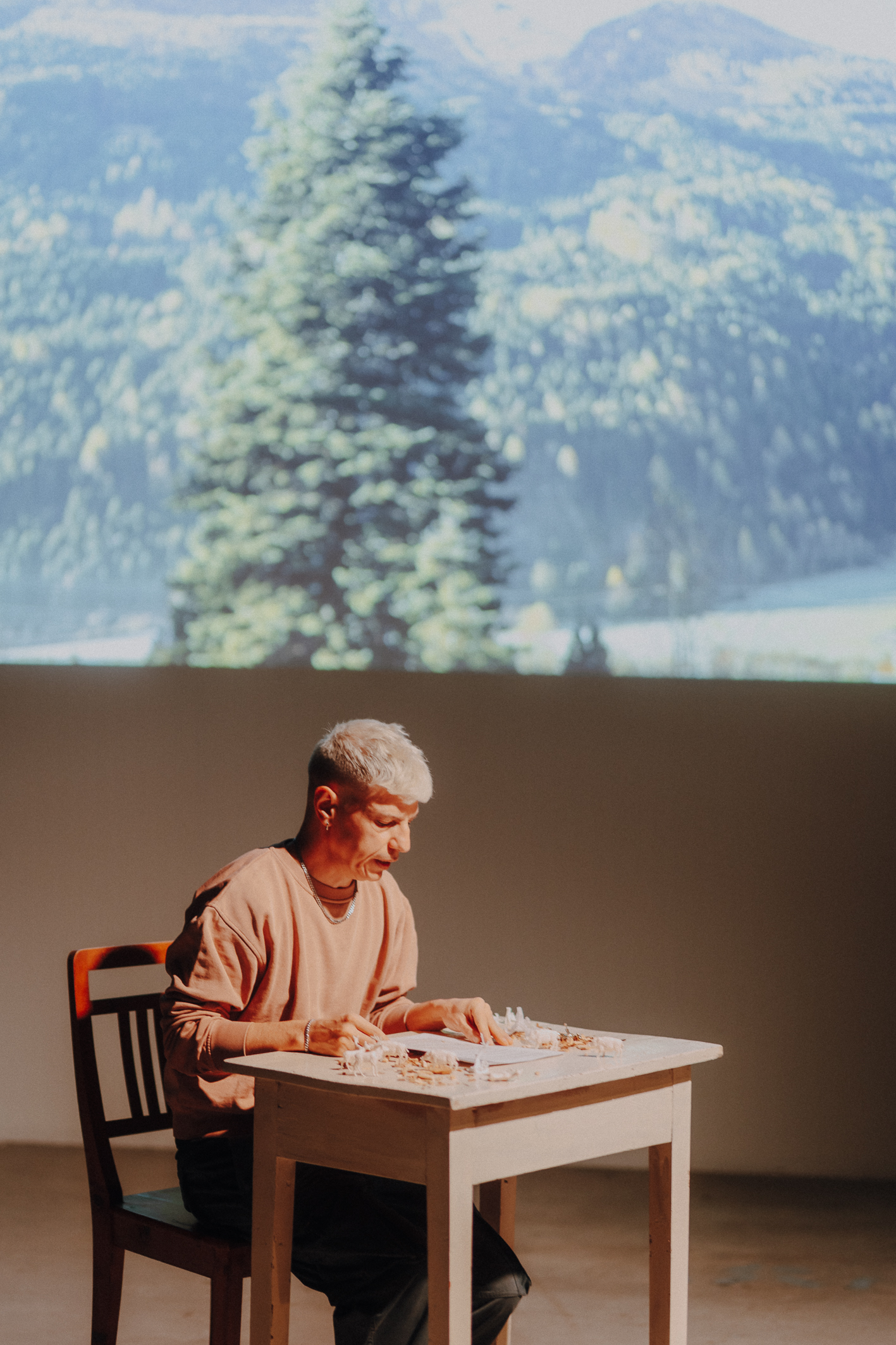
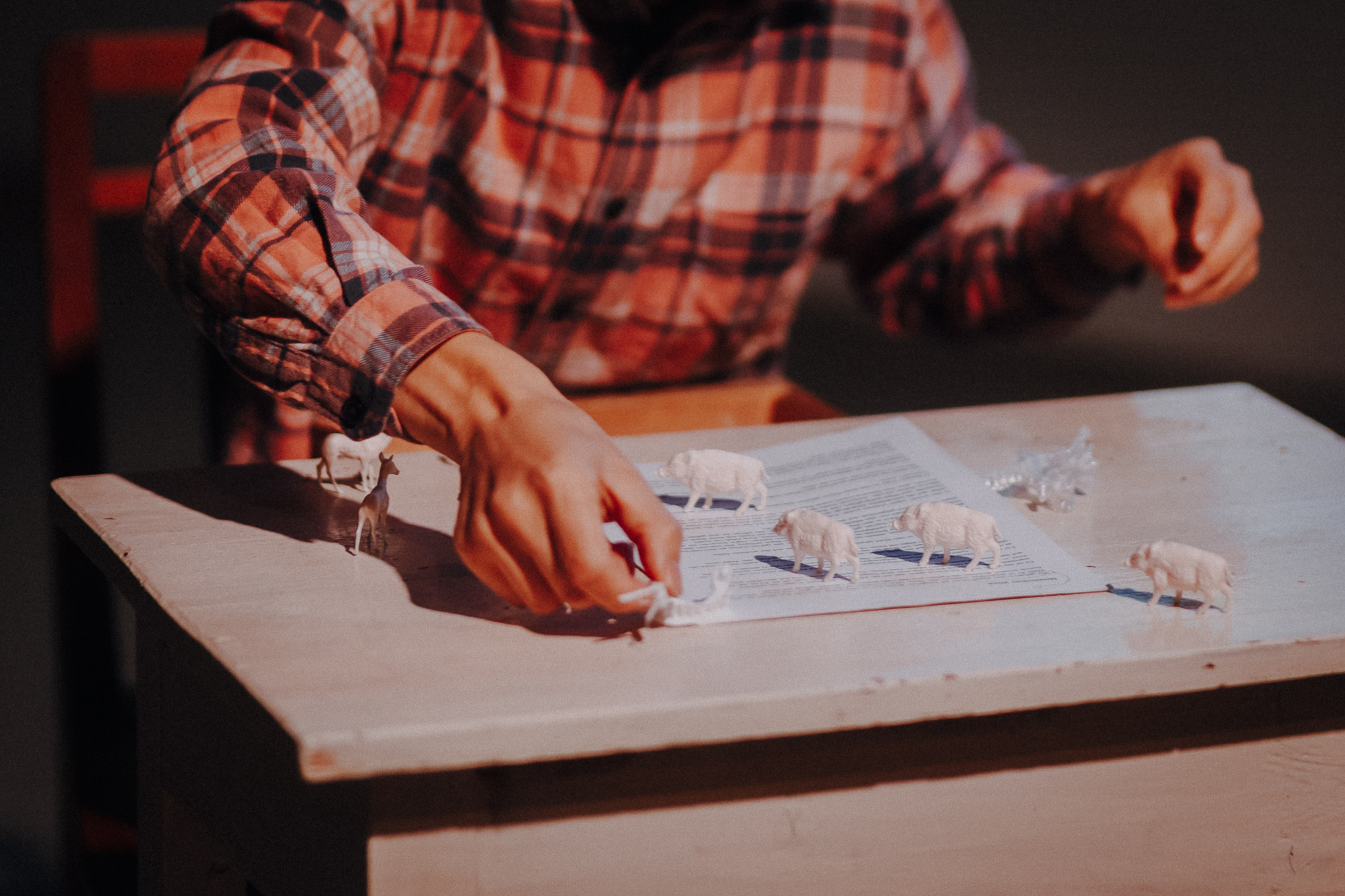
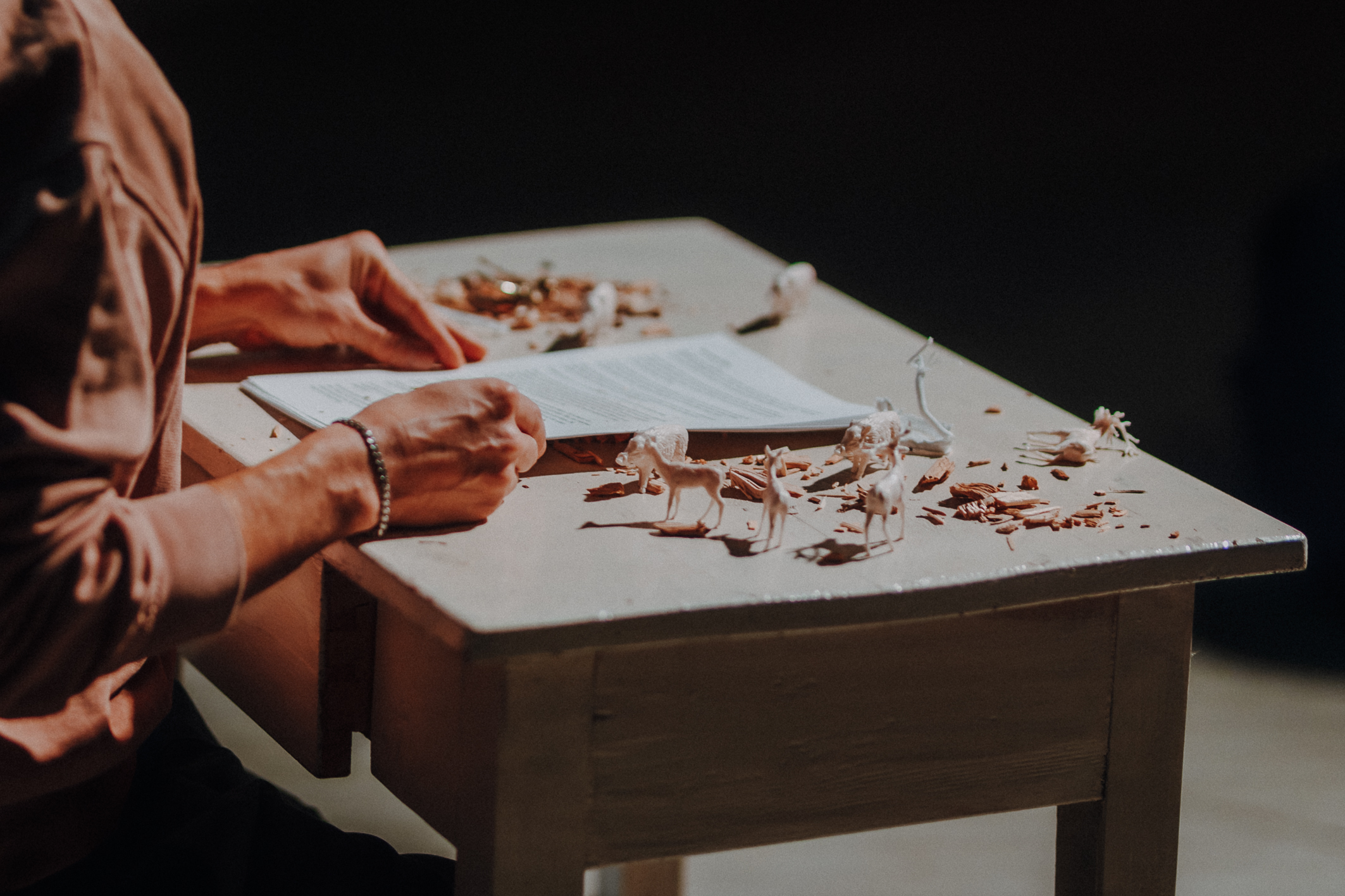
The piece starts with a prelude in the reading area: Furu plays at the table placed there with small plastic animals.
The piece starts with a prelude in the reading area: Furu plays at the table placed there with small plastic animals.
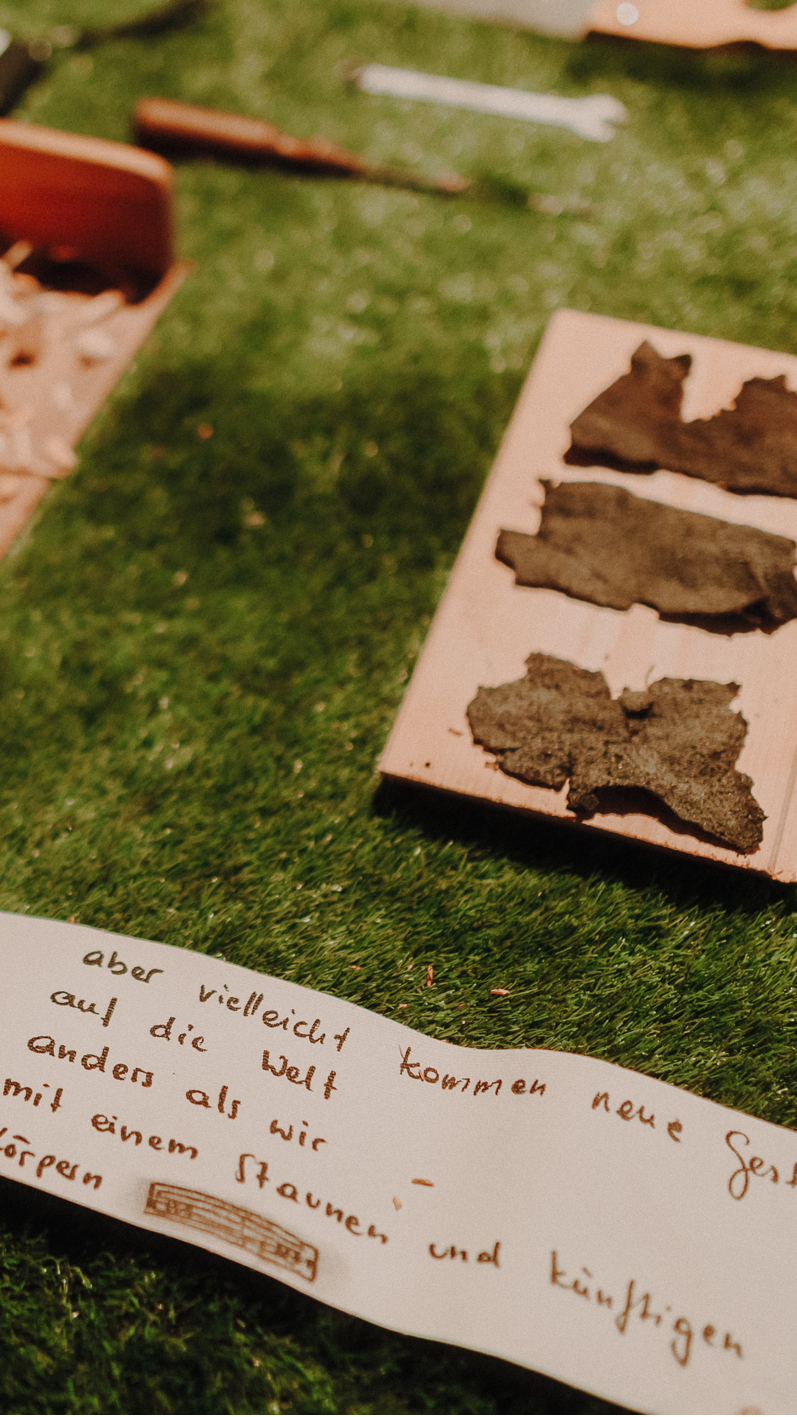
When after a few minutes he stands up and walks away, Adam takes his place and reads from the journal he kept throughout the year. Beside him a photograph is projected onto the wall; it shows the forest.
The excerpts from the journal tell of the forest and the trio’s relationship to it. The text ends in a way that provokes the transition from the anteroom of the reading into the Reforest space inside the black box. People go in.
The excerpts from the journal tell of the forest and the trio’s relationship to it. The text ends in a way that provokes the transition from the anteroom of the reading into the Reforest space inside the black box. People go in.
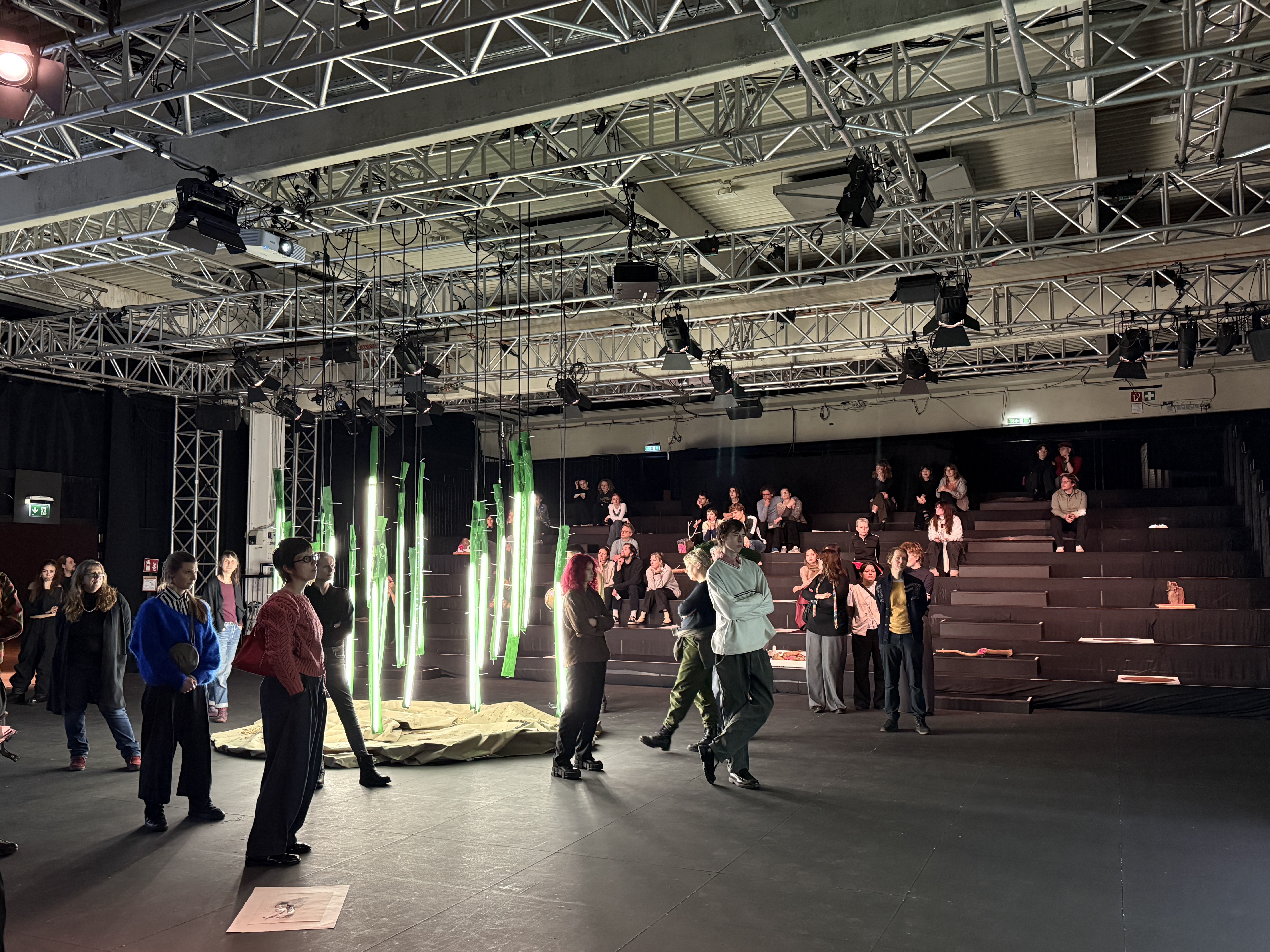
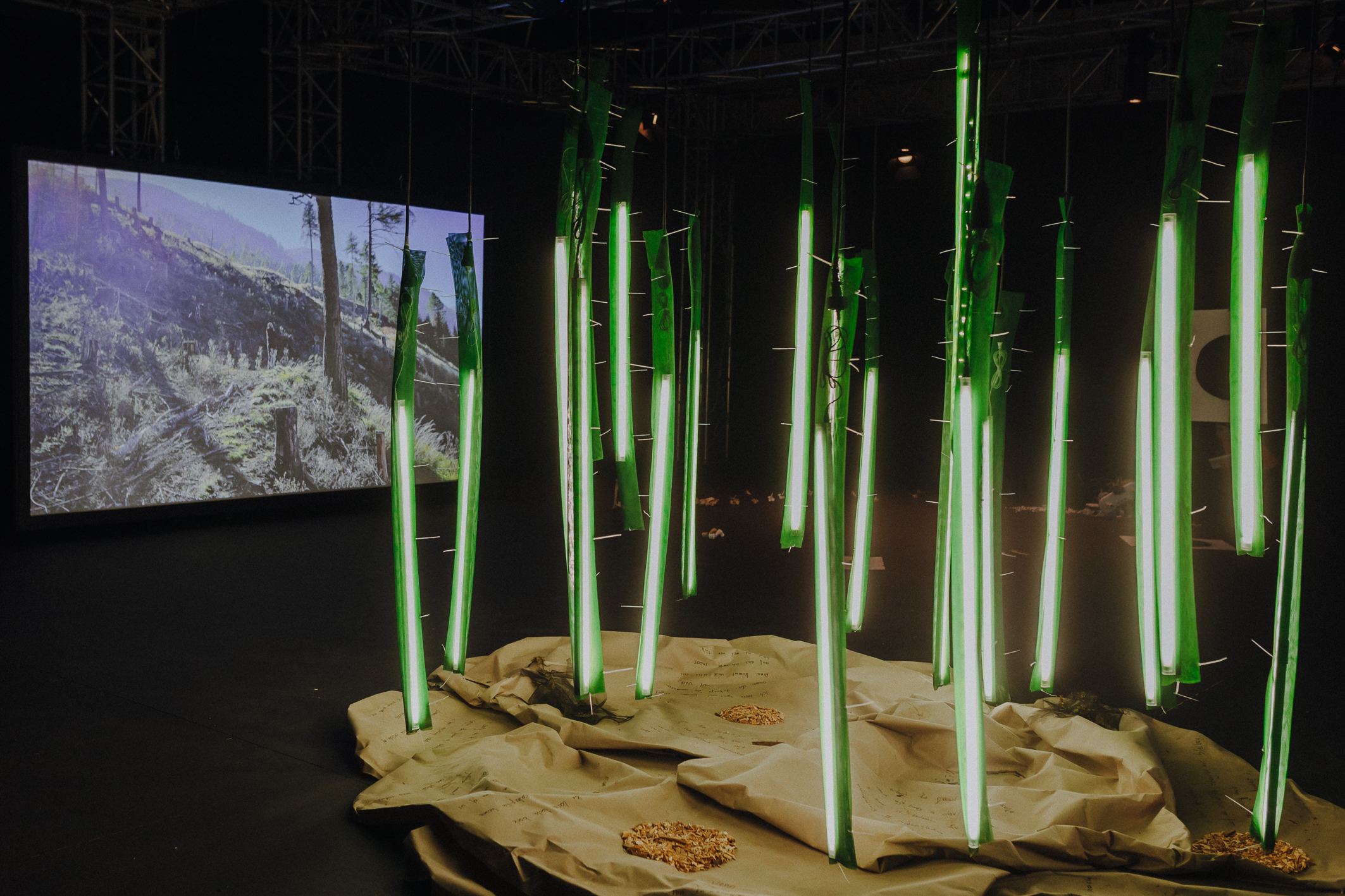
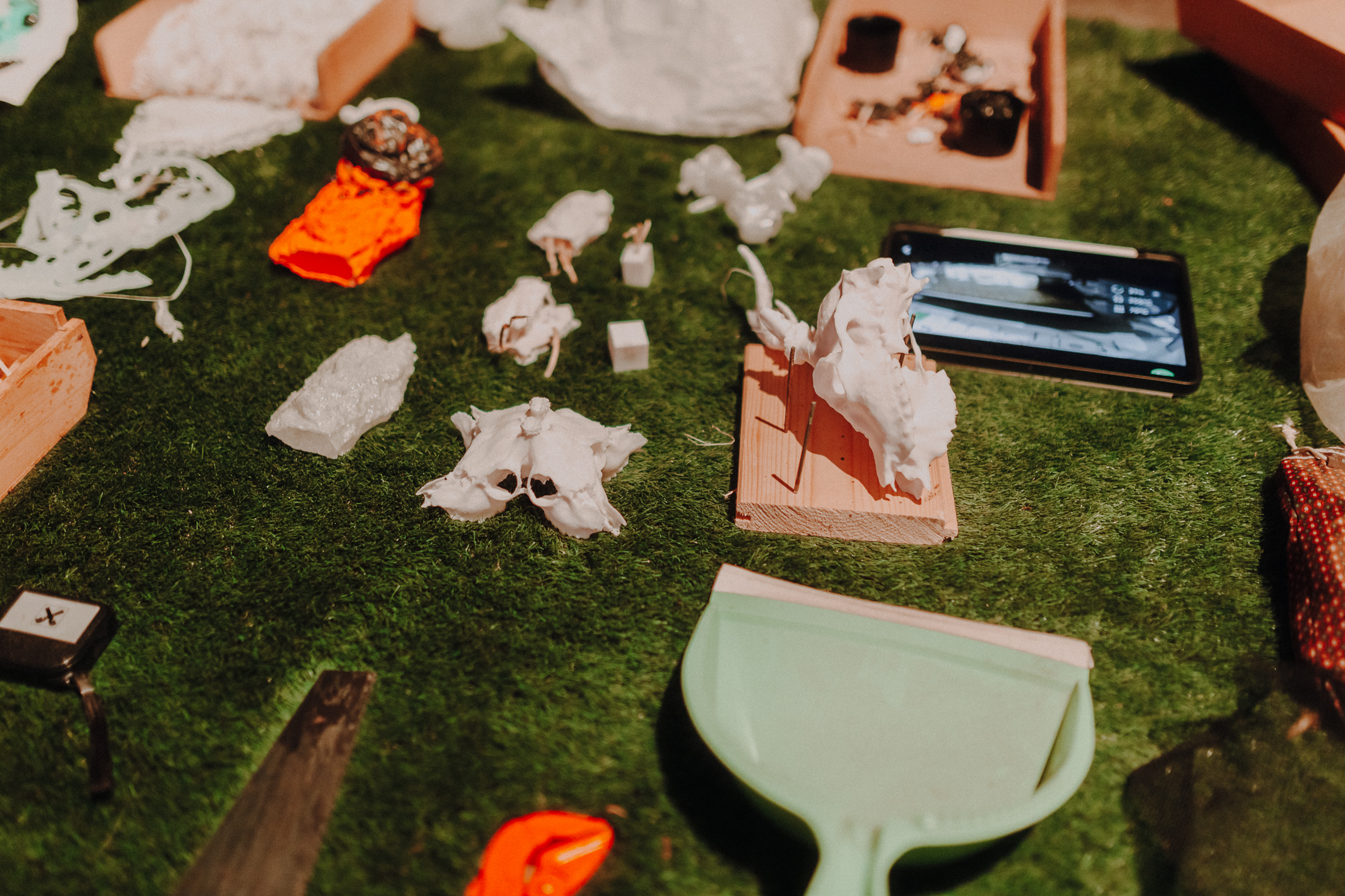
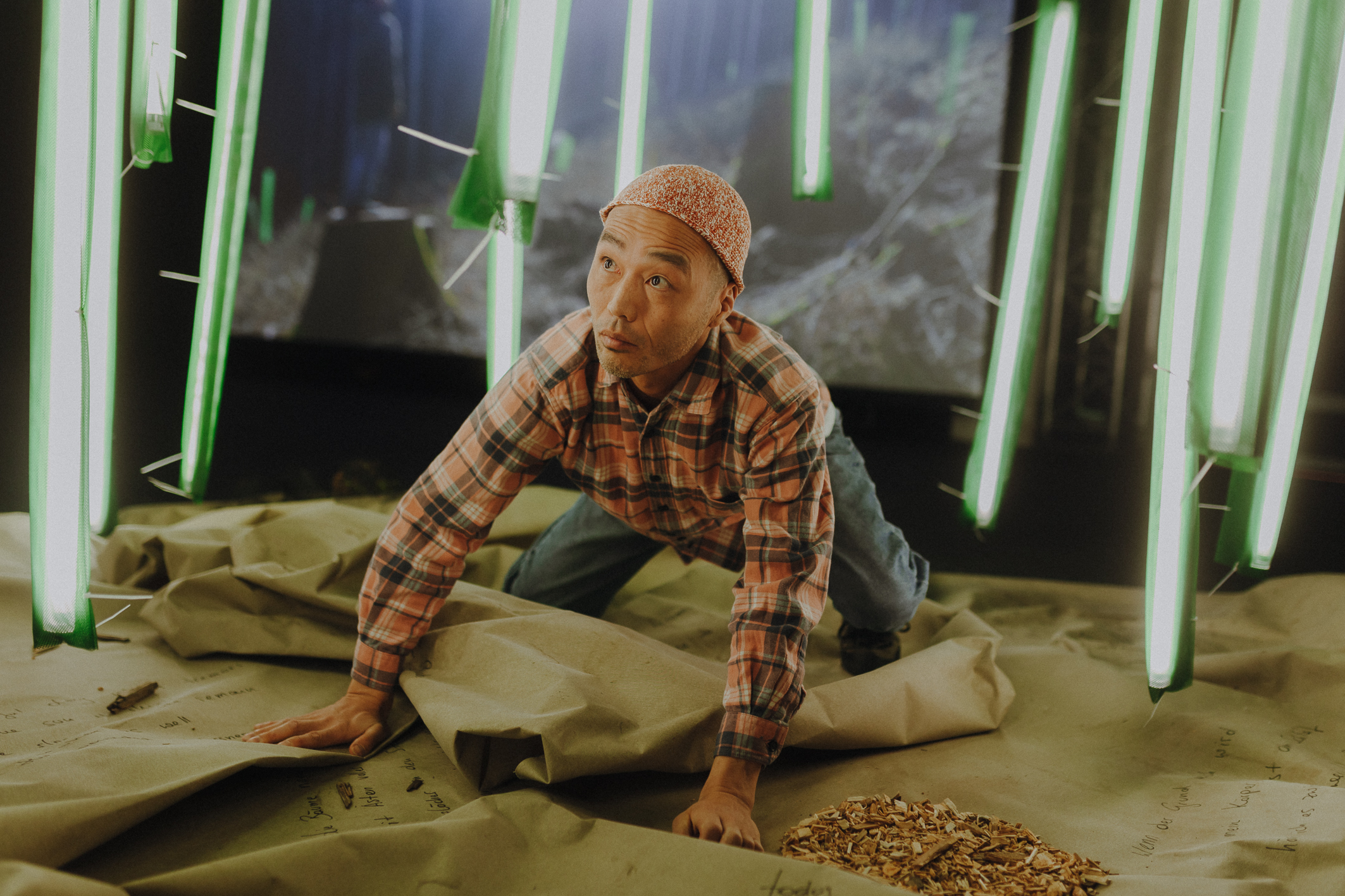
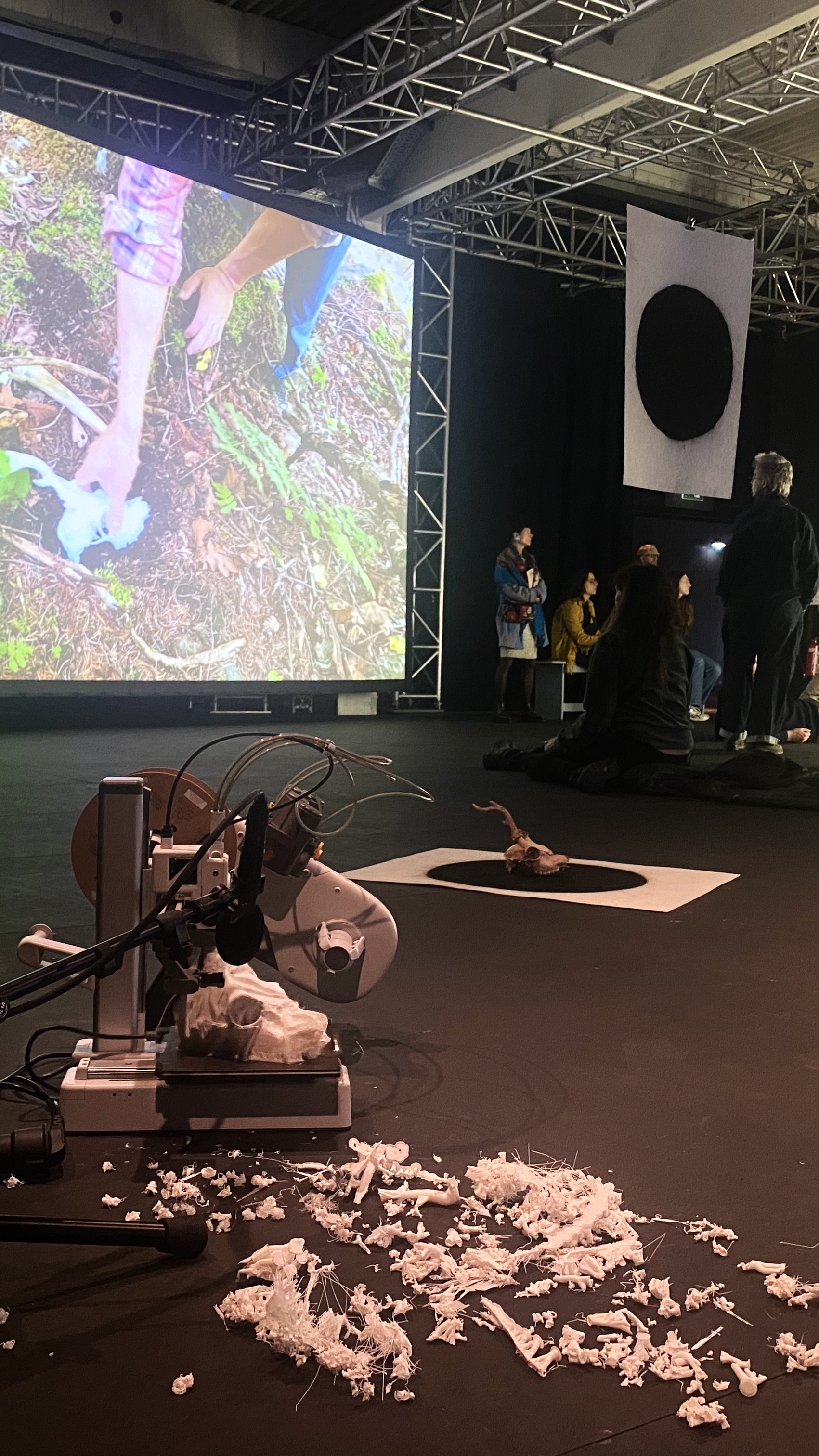
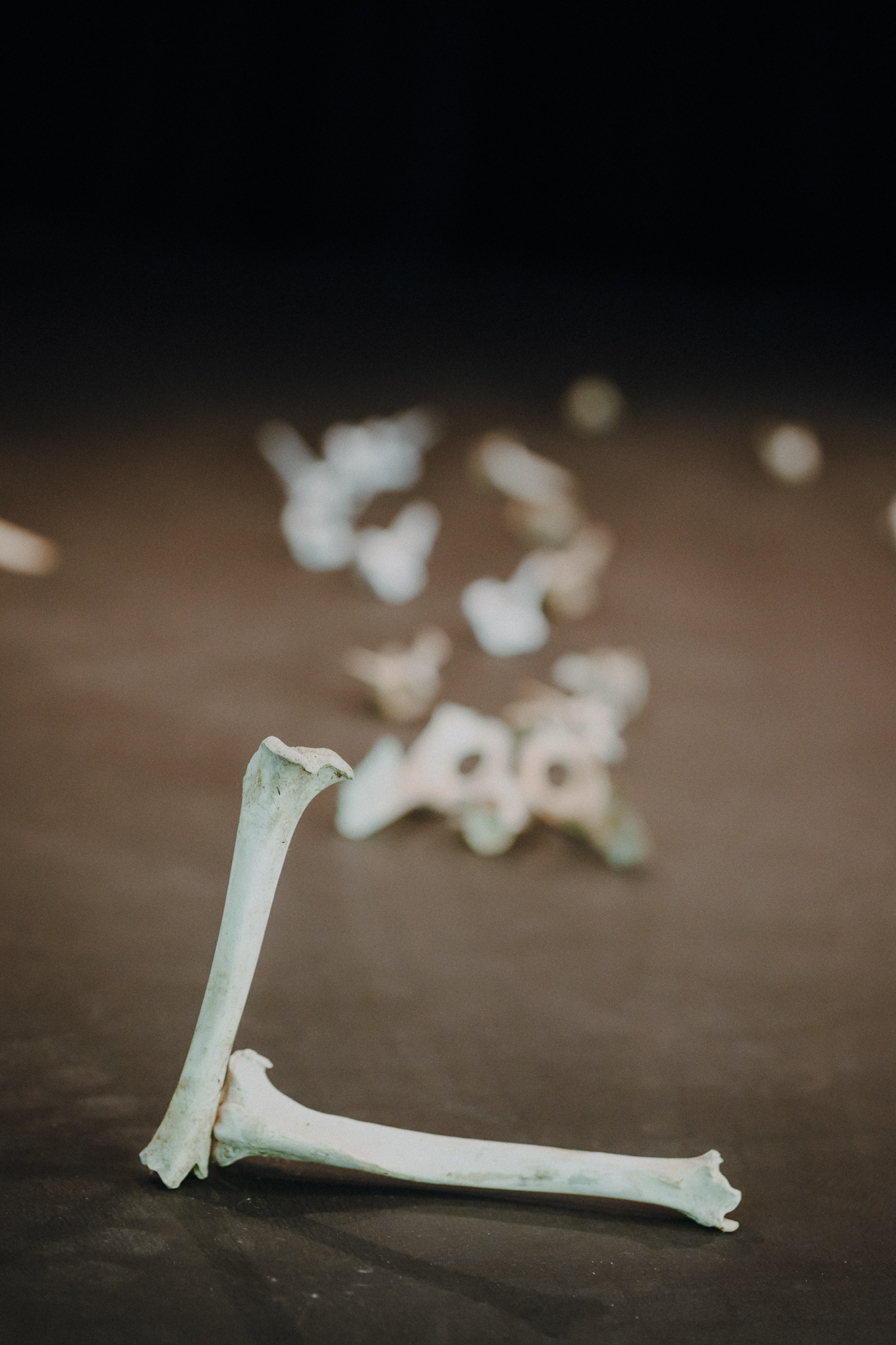
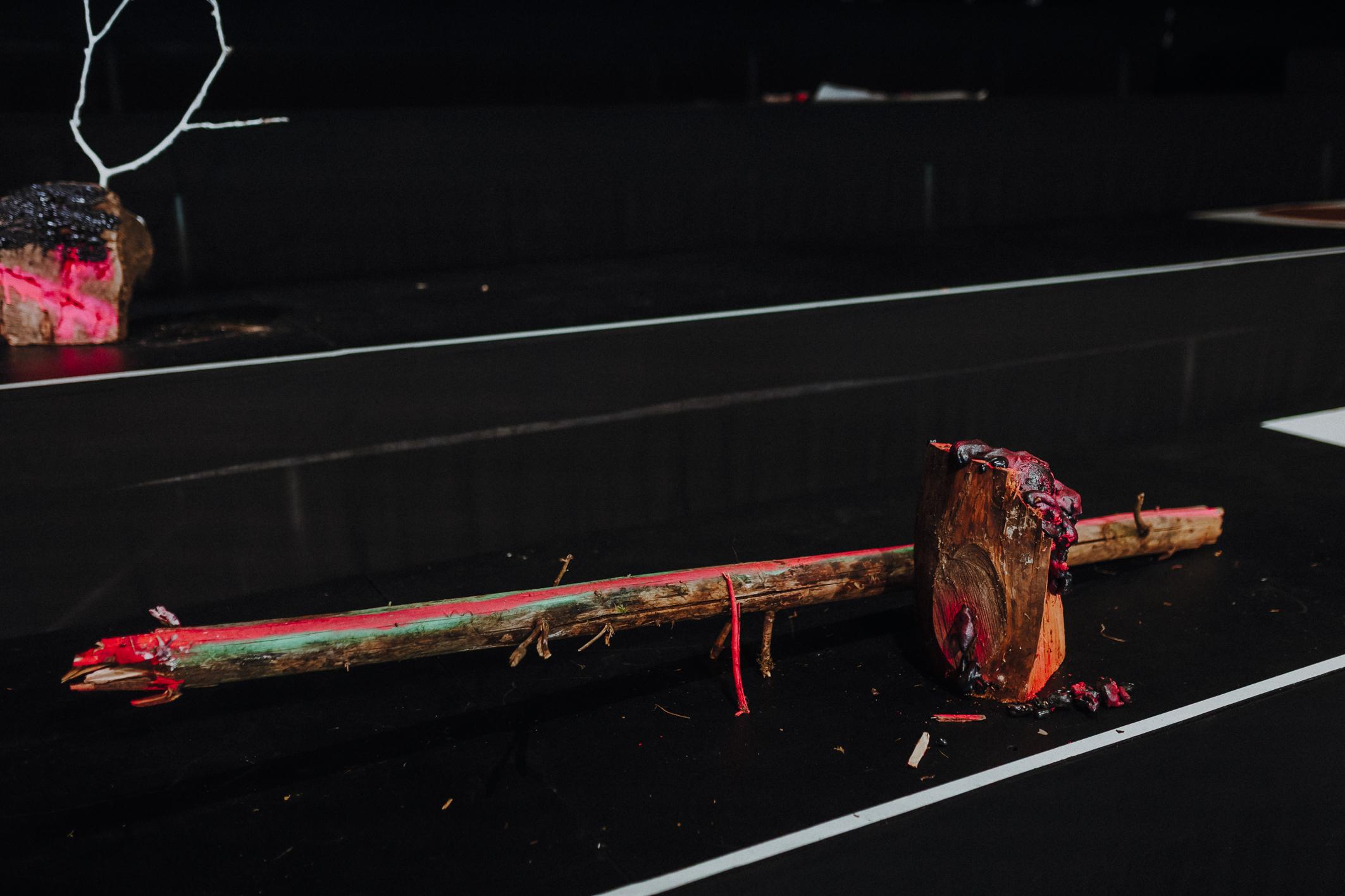
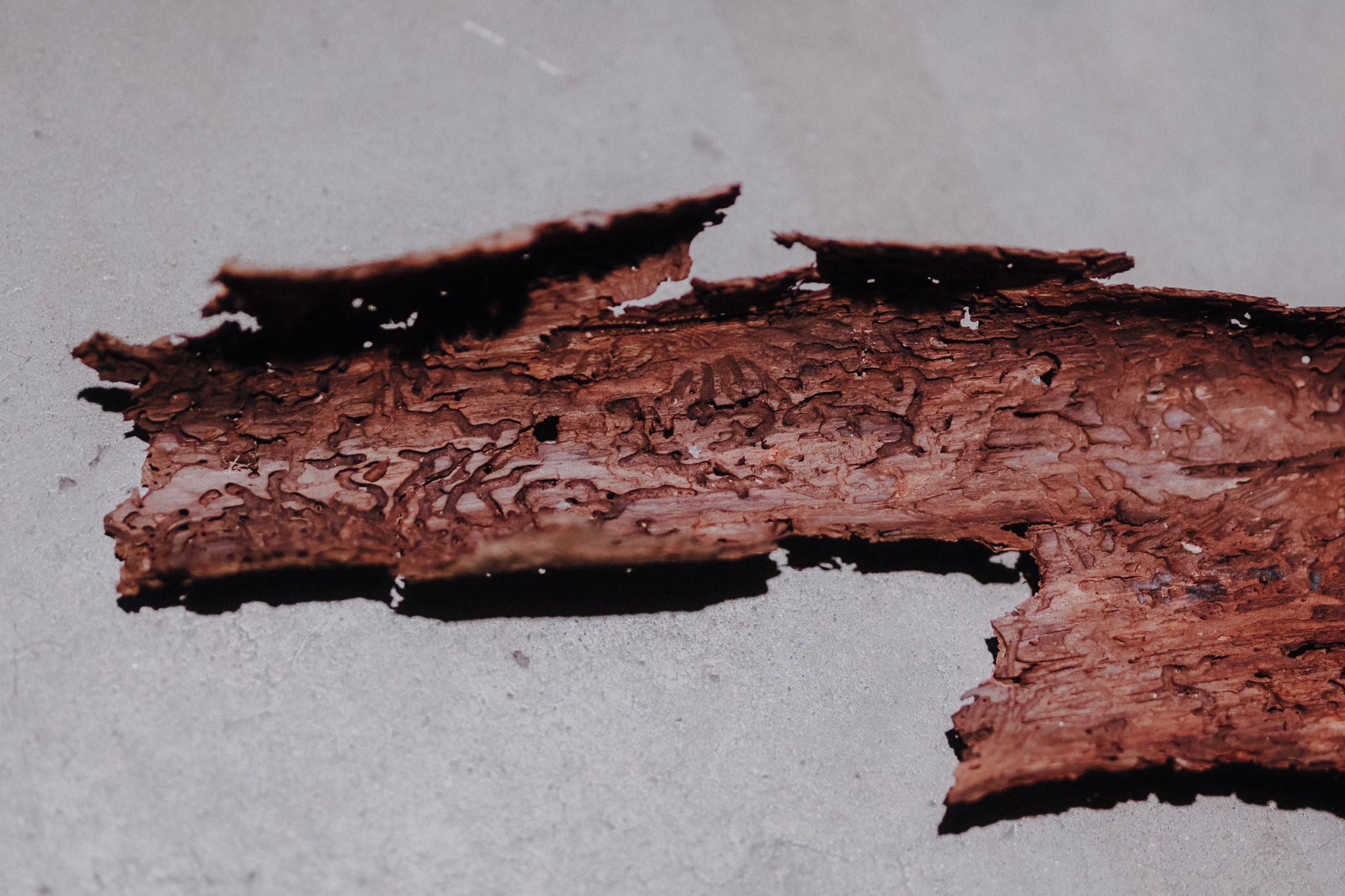
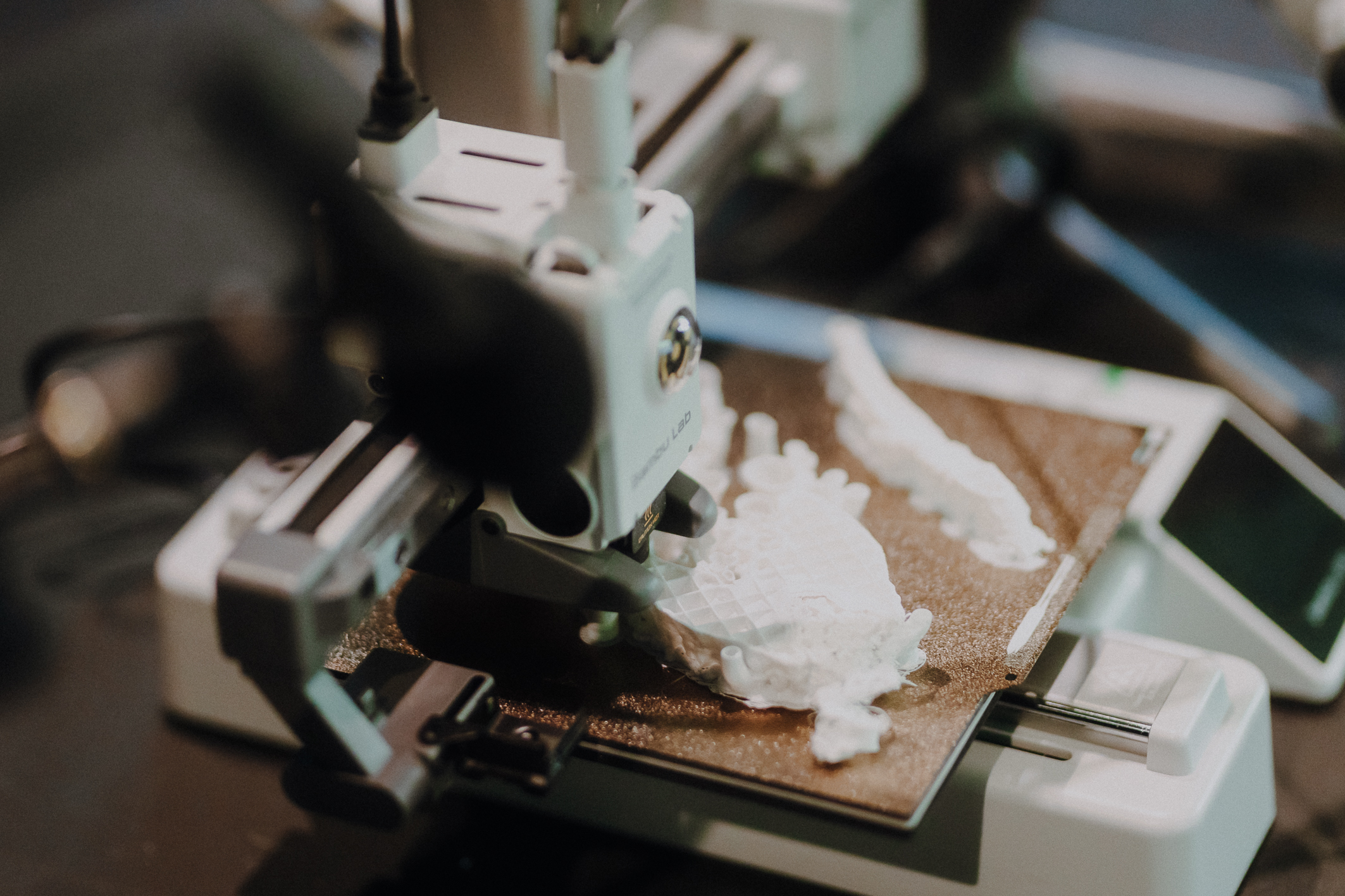
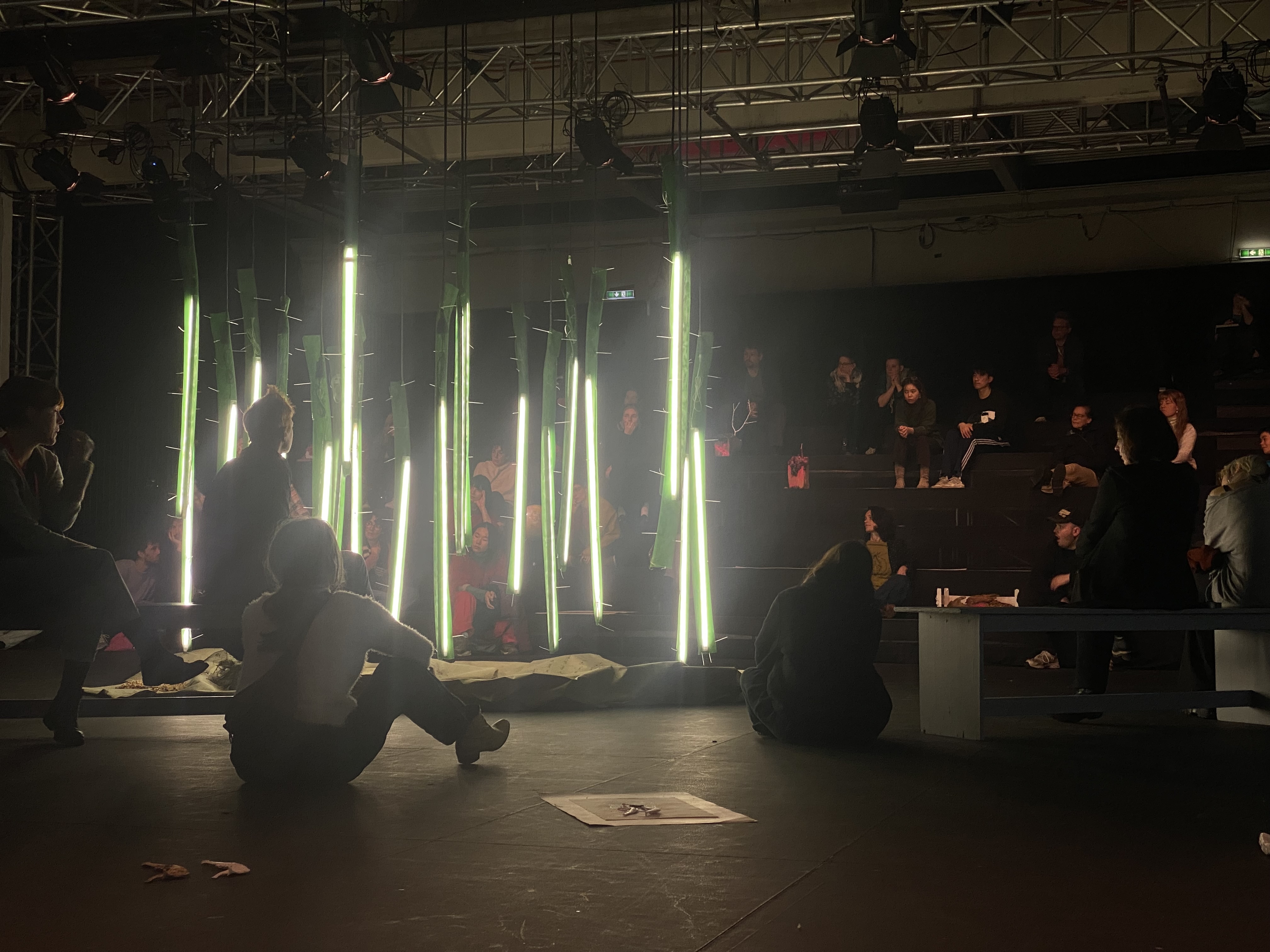
The black box is completely transformed: the unseated stands, the whole stage, and even beyond it, through an open slit in the curtain, the room behind it. On the floor there are charcoal and chalk drawings, wooden objects treated with forestry spray paint and tree foam; an installation of fluorescent tubes wrapped in tree fencing hangs from the ceiling; two large screens frame the space opposite each other at an angle; bones lie there as a fragile floor sculpture, and in the middle of them a 3D printer prints a skull that looks like the one made of bones on a black circle on a white sheet directly beside it. Another black circle hangs from the ceiling, with a pink cross on its back. Outside, behind the curtain, there is a bench and in front of it two large pieces of bark, curved and open upward. Sound comes from four channels, localizing noises, marking places—a composition by Judith that emerged from listening to the forest, as a soundtrack for the space.
People move everywhere, look at the images and the objects; at the beginning, in the first few minutes, they move quickly from one place to another—most want to see everything first and stay only briefly at individual stations. Then it becomes calmer; some sit down, others remain standing, and some stroll slowly.
At some point, attention shifts more and more to Furu, who moves from within the audience—at first part of it—more and more present, until he begins to dance very slowly on the stands—right down in the corner. The scene unfolds from that outermost point of the stands, with its drawings, objects, and spectators, across the entire surface and beyond it. Slowness turns into activity and interaction with the objects, up to a waltz with a broken-off trunk.
At some point, attention shifts more and more to Furu, who moves from within the audience—at first part of it—more and more present, until he begins to dance very slowly on the stands—right down in the corner. The scene unfolds from that outermost point of the stands, with its drawings, objects, and spectators, across the entire surface and beyond it. Slowness turns into activity and interaction with the objects, up to a waltz with a broken-off trunk.
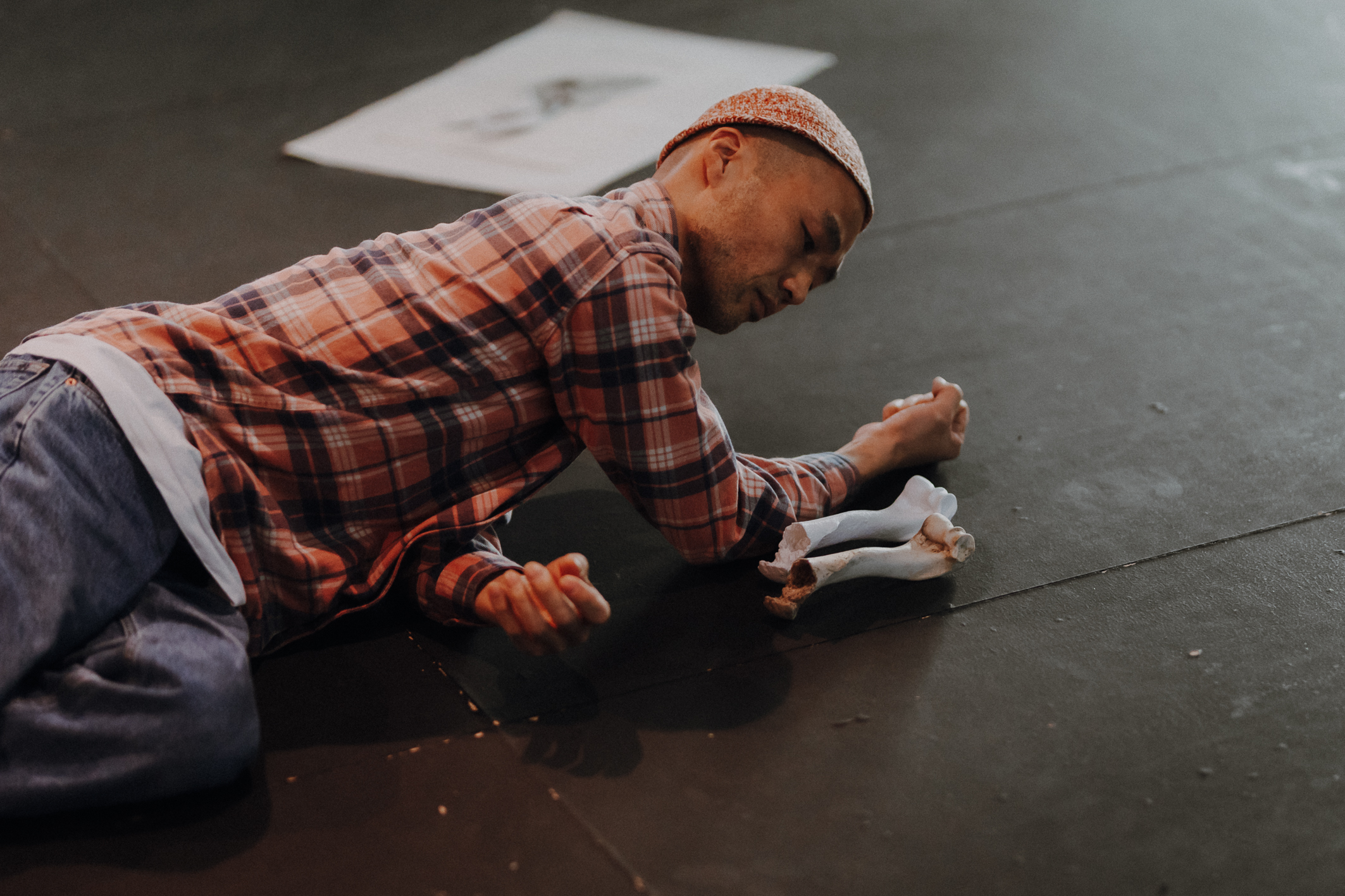
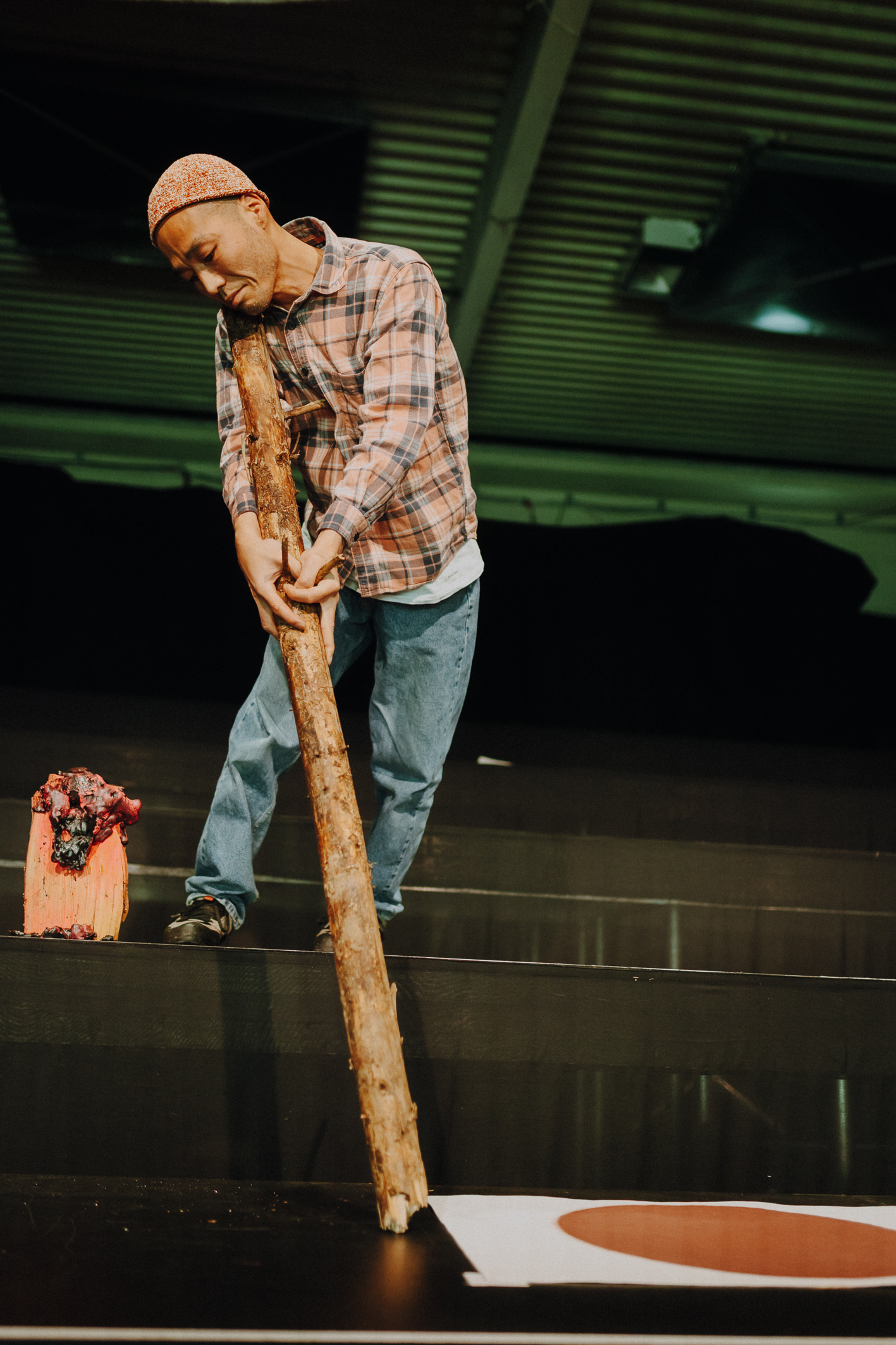
Furu returns to the audience; before that he touches an old globe that is part of the installation. The sound of the earth’s axis trembling as it turns leads into the increasing intensity of the sound in the space, and the images on the two screens move to the center. They show an injured forest, filmed with a handheld camera that comes painfully close to the trees.
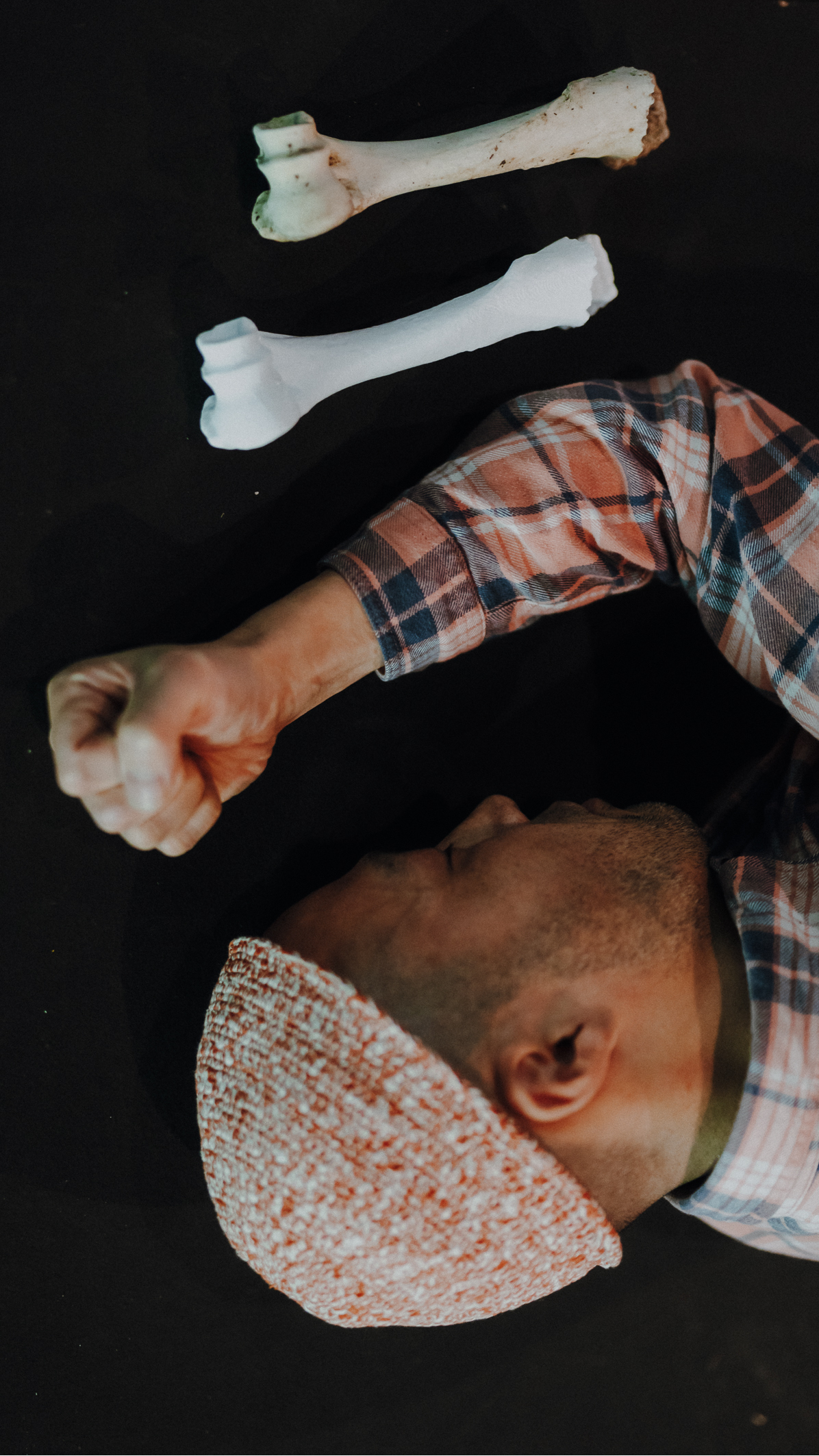
At some point the audience notices Furu near the bones installed on the floor and the printer. They first see him walking slowly toward the things, looking at them, then at some point sitting down and lying down. After a long transition, an approach, Furu lies next to the animal bones found in the forest and next to othersreplicated with the printer.
At some point the audience notices Furu near the bones installed on the floor and the printer. They first see him walking slowly toward the things, looking at them, then at some point sitting down and lying down. After a long transition, an approach, Furu lies next to the animal bones found in the forest and next to othersreplicated with the printer.
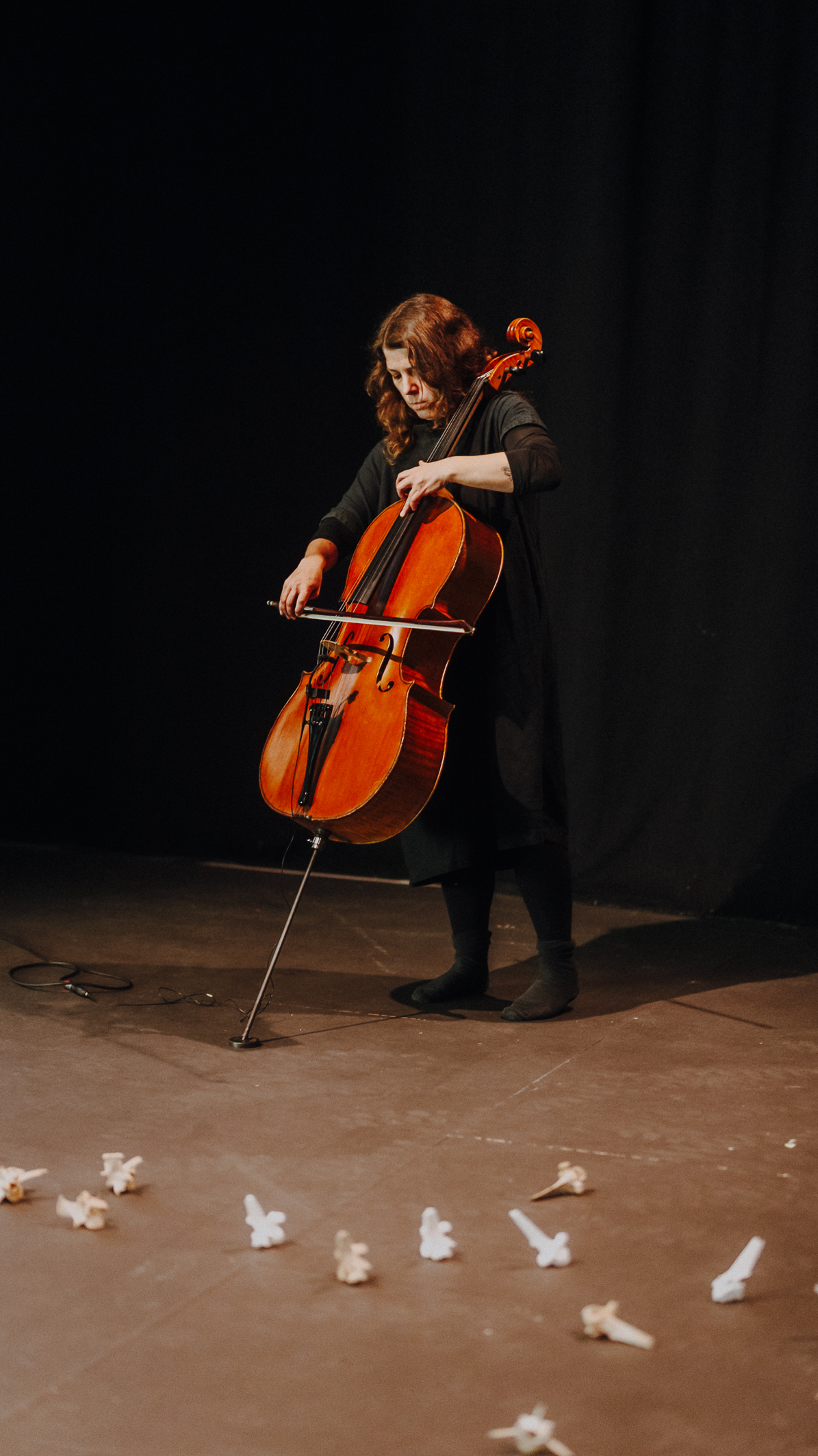
Between machine, human, and animal, between one and the other reproduction, between death and vitality and functioning, Furu begins to move. Judith joins and plays the cello. Between her sounds and Furu’s movements, a space of closeness, familiarity, and openness emerges. Dance and sound are independent, and turned toward each other.
In the live performance at the end, as the conclusion and climax of the piece, the time spent together condenses. It reveals itself to the audience there, where for a certain time we all are: between the intimate play of the elements and the vastness of the space.
In the live performance at the end, as the conclusion and climax of the piece, the time spent together condenses. It reveals itself to the audience there, where for a certain time we all are: between the intimate play of the elements and the vastness of the space.
Writings on Reforest:
Artistic Collaboration: Michiyasu Furutani, Judith Hamann
All images by Christine Miess
Supported by the Residency Program of the Republic of Slovenia Public Fund for Cultural Activities
All images by Christine Miess
Supported by the Residency Program of the Republic of Slovenia Public Fund for Cultural Activities